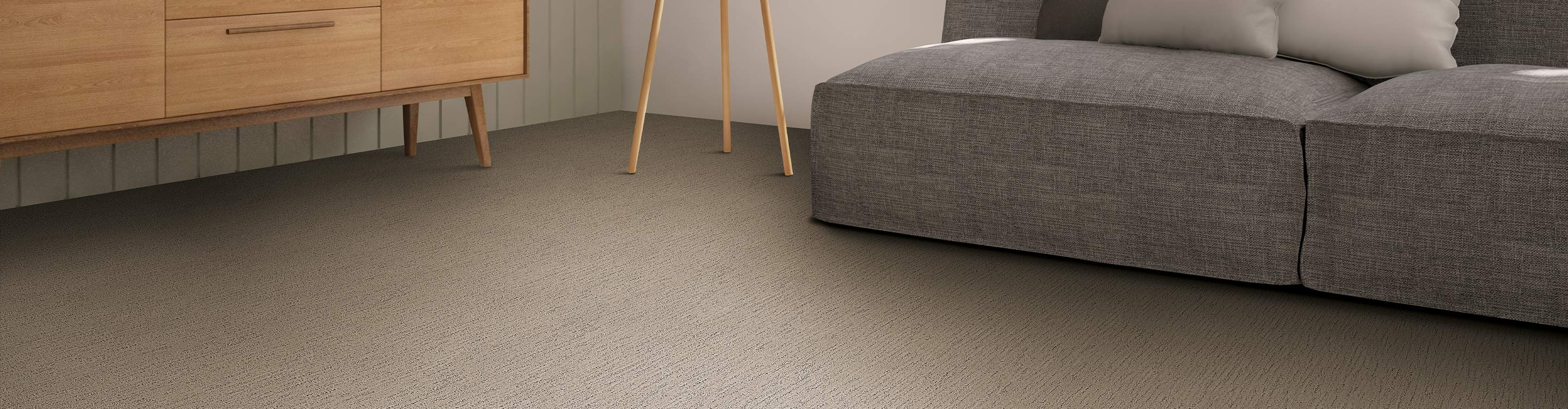
Every fiber brings its own strengths to the table. Nylon prioritizes durability and bounce-back. Polyester and triexta prioritize softness and stain resistance. Olefin handles moisture better than any other synthetic. Wool is the premium natural pick for anyone who wants a long-lasting, biodegradable floor.
Keep in mind that fiber is separate from carpet construction. Whether a carpet is loop pile, cut pile, Berber, or frieze is its own decision, one we cover in our carpet types guide. Below, we'll walk through each fiber, what it does best, and where it fits in your home.
Carpet fiber is what your carpet is made from, and it shapes almost everything about how that carpet performs: durability, softness, stain resistance, and how well it holds up over the years. As your trusted flooring partner, we're here to help you understand what sets each fiber apart so you can choose with confidence. Read on to explore the fibers that make up today's carpet and find the one that fits your home.
Nylon has been the most popular synthetic carpet fiber in the country for decades, and it's easy to see why. Its durability and resilience make it the go-to choice for households that want a floor built to last.
What sets nylon apart is its ability to spring back after foot traffic presses it down. Carpet that stays flat under daily use starts to mat over time, and that's one of the most common ways a carpet wears out. Nylon resists this better than any other synthetic fiber on the market, which makes it the benchmark for hallways, stairs, living rooms, and any space that sees regular, heavy use.
Nylon also takes dye exceptionally well. That means consistent color and a wide range of options, without the fading that can affect other synthetic fibers over time. It responds well to cleaning too, and can be treated with stain-resistant finishes for extra protection.
You'll find nylon in both straight and blended varieties. Blends typically combine nylon with a small amount of another fiber to adjust softness or cost while keeping most of nylon's durability intact. If you want a long-lasting, all-around carpet, nylon is a great place to start. Shop nylon carpet to see the full range.
Polyester leads the pack when it comes to softness and color, and PET polyester made from recycled plastic bottles has become one of the most widely available, eco-conscious carpet options around.
The defining trait of polyester is that it's hydrophobic, meaning the fiber itself doesn't absorb water. That gives polyester carpet a built-in resistance to moisture-based stains. Spills bead on the surface instead of soaking in, which makes cleanup far more forgiving than with fibers that absorb moisture easily. Because this resistance is part of the fiber itself, it never wears off the way surface treatments can.
Where polyester gives a little ground is in resilience. Under heavy, sustained foot traffic, polyester is more likely to crush and mat than nylon. That makes it a wonderful fit for bedrooms, home offices, formal dining rooms, and other lower-traffic spaces where softness matters most, often at a friendlier price point than nylon or triexta. For your busiest living areas, nylon or triexta will typically serve you better.
Polyester also comes in a few specialty forms. Polysilk is an ultra-soft variant built for a truly luxurious feel, available in both standard and blended versions. Polyethylene shows up in certain texture-forward constructions as well. In most cases, the choice comes down to standard PET polyester or a polysilk build, depending on how much softness you're after. Shop polyester carpet to compare your options.
Triexta is the newest major synthetic carpet fiber, officially recognized by the Federal Trade Commission in 2009 as its own fiber category, separate from polyester. It has grown steadily in popularity ever since, because it pairs the softness of polyester with durability that comes close to nylon, a combination standard polyester simply can't match.
The key difference between triexta and polyester comes down to where the stain resistance lives. In PET polyester, that resistance comes from the fiber's natural hydrophobic structure. In triexta, it's built in at a molecular level, which means it's permanent and won't fade with cleaning or wear. That makes triexta a smart pick for homes with kids or pets, where spills and everyday messes are simply part of life.
Triexta is also softer than standard polyester and holds up better under foot traffic, though nylon still leads for the most demanding, high-traffic spaces. If you want the feel of a soft carpet in your main living areas without giving up stain performance, triexta hits a sweet spot. A quality pad makes a real difference here too. See our carpet padding guide to learn more. Shop triexta carpet to explore what's available.
Olefin, also known by its chemical name polypropylene, is the fiber built for moisture. While nylon and polyester are designed primarily for everyday indoor living, olefin steps up for moisture-prone and outdoor spaces.
What makes olefin stand out is that it's solution-dyed. Instead of being dyed after the fiber takes shape, like most synthetic fibers, olefin gets its color built in during the extrusion process. That makes it naturally resistant to bleach, sun fading, and moisture-related color loss, all qualities that suit basements, laundry rooms, covered outdoor spaces, and commercial settings where standing up to moisture matters more than plush softness underfoot.
The tradeoff with olefin is resilience. Under heavy, sustained indoor foot traffic, it's more prone to matting than nylon or triexta, and it doesn't bounce back from crushing quite as well. For moisture-heavy spaces, that's a fair trade. For high-traffic, dry indoor rooms, nylon remains the stronger fiber. Both standard and blended olefin options are available. Shop olefin carpet to see what's in stock.
Beyond the synthetic categories, there's a range of natural and specialty fibers worth knowing about for specific needs and preferences.
Wool is the original premium carpet fiber and still sets the standard for natural material performance. It's naturally flame-resistant without any chemical treatment, biodegradable, and resilient in a way synthetics still haven't fully matched. It handles humidity well, and with proper care, it can outlast synthetic carpet by a wide margin. It also comes at a noticeably higher price point, which tends to reserve it for formal spaces, higher-budget projects, and homeowners who prioritize natural materials above all.
Sisal and natural blends use plant-based fibers, typically blended with wool or synthetic fibers, to balance texture with durability. These blends bring a natural, tactile character that's tough to replicate synthetically, and they work best in lower-traffic rooms, hallways, and spaces where a distinctive natural texture is the goal.
Tencel and specialty constructions round out the category. Tencel comes from wood pulp and offers a soft, smooth surface with a lighter environmental footprint than petroleum-based synthetics. Specialty and synthetic yarn blends cover constructions that don't fit neatly into the primary fiber types but still bring specific performance or style benefits.
For wool, sisal, tencel, or specialty options, talk with your local flooring expert about what's currently available and what fits your project best. Shop all carpet to explore the full catalog.
The best fiber depends on the room and how it's used. For high-traffic rooms, hallways, and stairs, nylon is the most durable and resilient choice. For bedrooms and lower-traffic spaces where softness comes first, polyester and triexta offer a softer feel with solid stain resistance at a friendlier price point than nylon. Triexta is the strongest pick for anyone who wants both softness and stain resistance in one fiber, especially in homes with kids or pets. Olefin is the top choice for basements, laundry rooms, and other moisture-prone areas. Wool is the premium natural option for formal spaces and anyone who prioritizes natural, biodegradable materials.
The five primary carpet fibers are nylon, polyester, triexta, olefin, and wool. Nylon is the most durable synthetic and the most widely sold fiber in the country. Polyester is the softest synthetic and naturally resists stains. Triexta, recognized as its own fiber category by the FTC in 2009, combines polyester-level softness with better durability and permanent, built-in stain resistance. Olefin, or polypropylene, is solution-dyed and moisture-resistant, making it a strong fit for basements and outdoor applications. Wool is the premium natural fiber, naturally flame-resistant and biodegradable.
Nylon is the most commonly used carpet fiber in the United States. Its blend of durability, resilience under foot traffic, and consistent color has made it the standard choice for residential and commercial carpet for decades. Polyester and triexta have gained ground as softness has become a bigger priority for shoppers, but nylon still leads the category overall.
For high-traffic areas like living rooms, hallways, and stairs, nylon is the stronger investment. It holds up better under foot traffic, resists matting, and lasts longer in demanding conditions. For bedrooms and lower-traffic rooms, polyester offers a softer, often more budget-friendly option with solid built-in stain resistance. If you want polyester's softness in a busier room, triexta is worth a look, since it offers comparable softness with better durability than standard polyester. Your local flooring expert can walk you through samples of both so you can compare look, feel, and performance for your space.
Ready to choose the carpet fiber that fits your home best? Explore your options below, or connect with a flooring expert to get started on your project.
Thank you for contacting Carpet One Floor & Home. Your local flooring expert will reach out to you regarding your inquiry.